
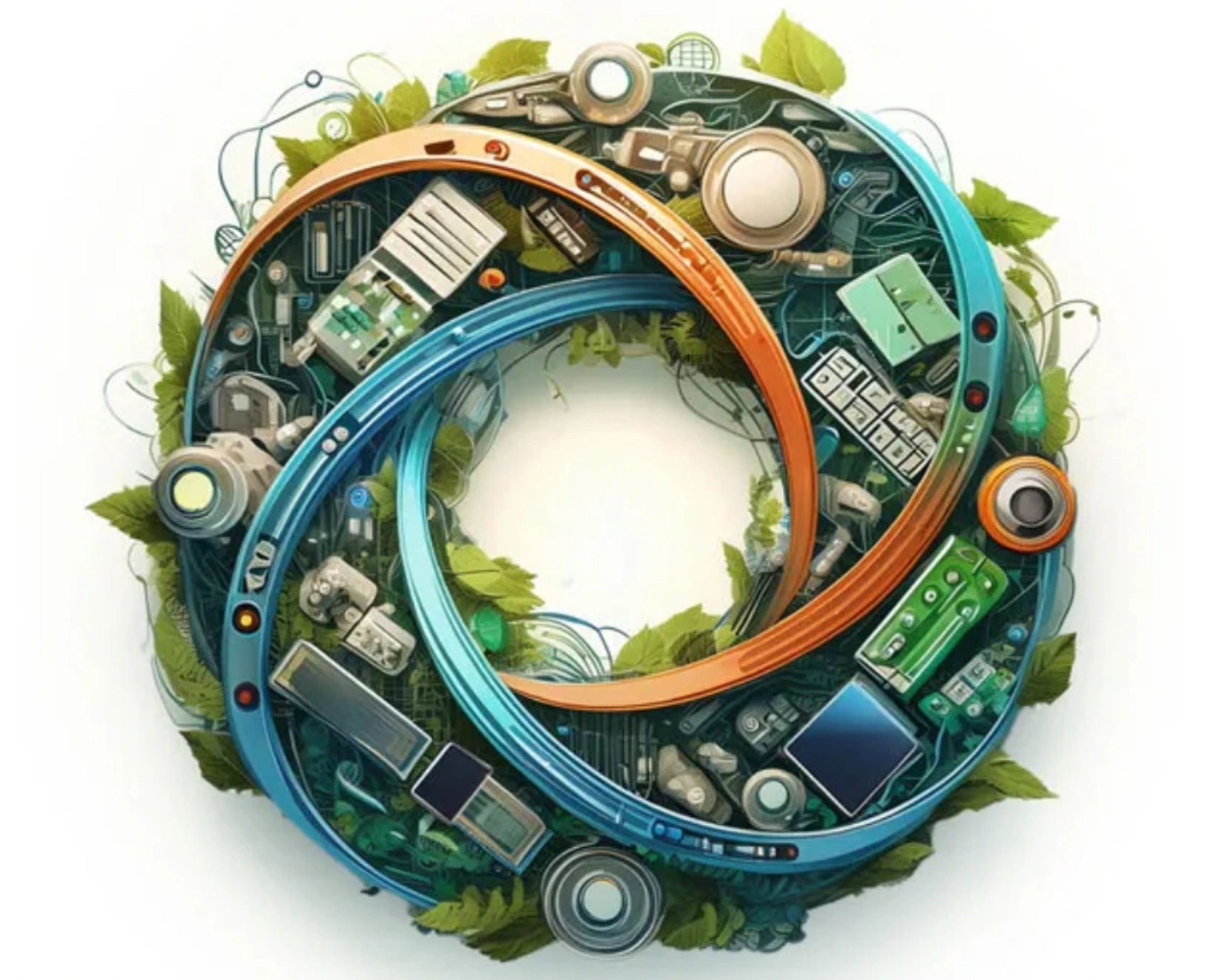
What if every product were born with its end in mind?
That’s the question driving a global movement toward circular product design—and one that defines the philosophy of BOUDI, a French leader in recycled material innovation.
In the traditional linear model, products are made, sold, and discarded. But in a circular model, design anticipates what happens next: reuse, repair, recovery, and regeneration.
At BOUDI, design isn’t just about aesthetics or function—it’s about foresight. By crafting products that can live multiple lives, BOUDI transforms the creative process into an act of responsibility and renewal.
What Is Circular Product Design?
Circular design is the practice of creating products that last longer, waste less, and return safely to the production cycle.
According to the Ellen MacArthur Foundation, it’s about “designing out waste and pollution” while keeping materials in use.
Traditional design asks, “How can we sell more?”
Circular design asks, “How can we make better?”
BOUDI applies this principle to everything it makes—from recycled plastic panels (EKOPANO) to furniture (EKOMOBILIER) and reusable flight cases (EKOCASE). Each item is engineered not for obsolescence, but for endurance and reuse.
The Principles of Circular Design
Circular product creation relies on five guiding principles:
- Durability: Products must withstand wear and time.
- Reparability: Components should be replaceable, not disposable.
- Recyclability: Materials must be easy to separate and regenerate.
- Transparency: Design choices should reveal material origins and impacts.
- Emotional Connection: A beautiful product is more likely to be cherished and reused.
BOUDI integrates all five into its eco-materials—ensuring sustainability isn’t just functional, but also emotional. When people love what they own, they keep it longer.
How BOUDI Designs for Reuse
BOUDI’s creative process starts at the end: the product’s afterlife.
Step 1 – Material Selection
BOUDI uses 100 % post-consumer plastics sourced through partners like Veolia and Suez. Only polymers that can be recycled repeatedly (like PP and PE) make the cut.
Step 2 – Modular Engineering
Every BOUDI product is designed to be disassembled, repaired, or reprocessed. Screws replace glues, and modular joints replace permanent bonds.
Step 3 – Traceability & Feedback Loops
Through partnerships with IMT Mines Alès and C2MA, BOUDI integrates material tracking and testing to improve circular performance over time.
Design doesn’t end at the product—it extends into the system that keeps it alive.
The Power of Material Storytelling
Circular design is also about narrative—helping consumers see beauty in sustainability.
Each BOUDI material carries a visible fingerprint of its recycled origin: swirls, specks, and textures that celebrate imperfection as authenticity.
This aesthetic transparency builds emotional connection, making sustainability feel tangible. As one BOUDI designer puts it, “We don’t hide the story of waste—we highlight it.”
That story turns every recycled object into a statement of hope and responsibility.
Collaboration: The Key to Circular Creation
No single brand can achieve circularity alone.
BOUDI’s approach relies on collaboration—linking recyclers, designers, engineers, and retailers into one ecosystem.
Key partners include:
- Veolia and Suez → collection and sorting.
- ECOMAISON → EPR compliance and post-consumer tracking.
- CREALIA Occitanie → funding and innovation acceleration.
- IMT Mines Alès & C2MA → R&D for material performance.
This network transforms circular design from concept to reality—showing that creativity grows stronger when shared.
Global Inspirations in Circular Design
Around the world, pioneers are redesigning products for longevity and reuse:
- Patagonia builds gear designed to be repaired for life.
- IKEA engineers modular furniture for easy assembly and recycling.
- TerraCycle creates packaging systems that loop indefinitely.
- Fairphone produces smartphones with replaceable parts and open repairability.
BOUDI joins this movement by focusing on the material foundation of design—creating components that make sustainable design accessible for all industries, from retail to construction
The Environmental Payoff of Circular Creation
| Metric | Reduction Achieved |
| CO₂ Emissions | -70 % vs virgin plastic production |
| Resource Extraction | -90 % new material use |
| Waste to Landfill | -80 % diversion |
| Energy Consumption | -50 % through closed-loop manufacturing |
By prioritizing recycled content and local supply chains, BOUDI minimizes transport emissions and supports France’s broader decarbonization goals.
Designing for Social Good
At BOUDI, design also means inclusion.
As an entreprise adaptée, BOUDI employs people with disabilities in its production and design teams. Every product embodies both environmental and social sustainability-proof that a truly circular business regenerates both materials and communities.
Circular design is therefore not just about objects-it’s about opportunity. It gives new purpose to people and materials alike.
The Future of Circular Product Creation
The next evolution of circular design is digital.
BOUDI is developing Material Passports—digital IDs embedded in products that record composition, origin, and recycling potential.
Paired with AI-driven life-cycle assessments, this technology ensures every material can be traced and reintroduced into new production cycles.
The Art of Sustainability
Circular design is more than a technical process—it’s a creative philosophy.
It asks designers to see beauty in continuity, to value imperfection, and to design not just for consumers, but for future generations.
At BOUDI, we believe that great design doesn’t end when the product ships. It ends when the material begins its next life.
Key Takeaways
- Circular product design extends product and material lifecycles.
- BOUDI integrates modular engineering and recyclable materials into every design.
- Collaboration with Veolia, IMT Mines Alès, and ECOMAISON ensures closed loops.
- Design storytelling turns sustainability into emotional connection.
- Reuse is both an art and an ethical responsibility.