
Every item has a second story waiting to be told.
Recommerce – the resale of pre-owned products – is giving everyday goods a new life, reducing waste, and redefining value. For BOUDI, a French social enterprise transforming post-consumer plastics into high-performance materials, recommerce is more than a market trend – it’s proof that sustainability and profitability can thrive together.
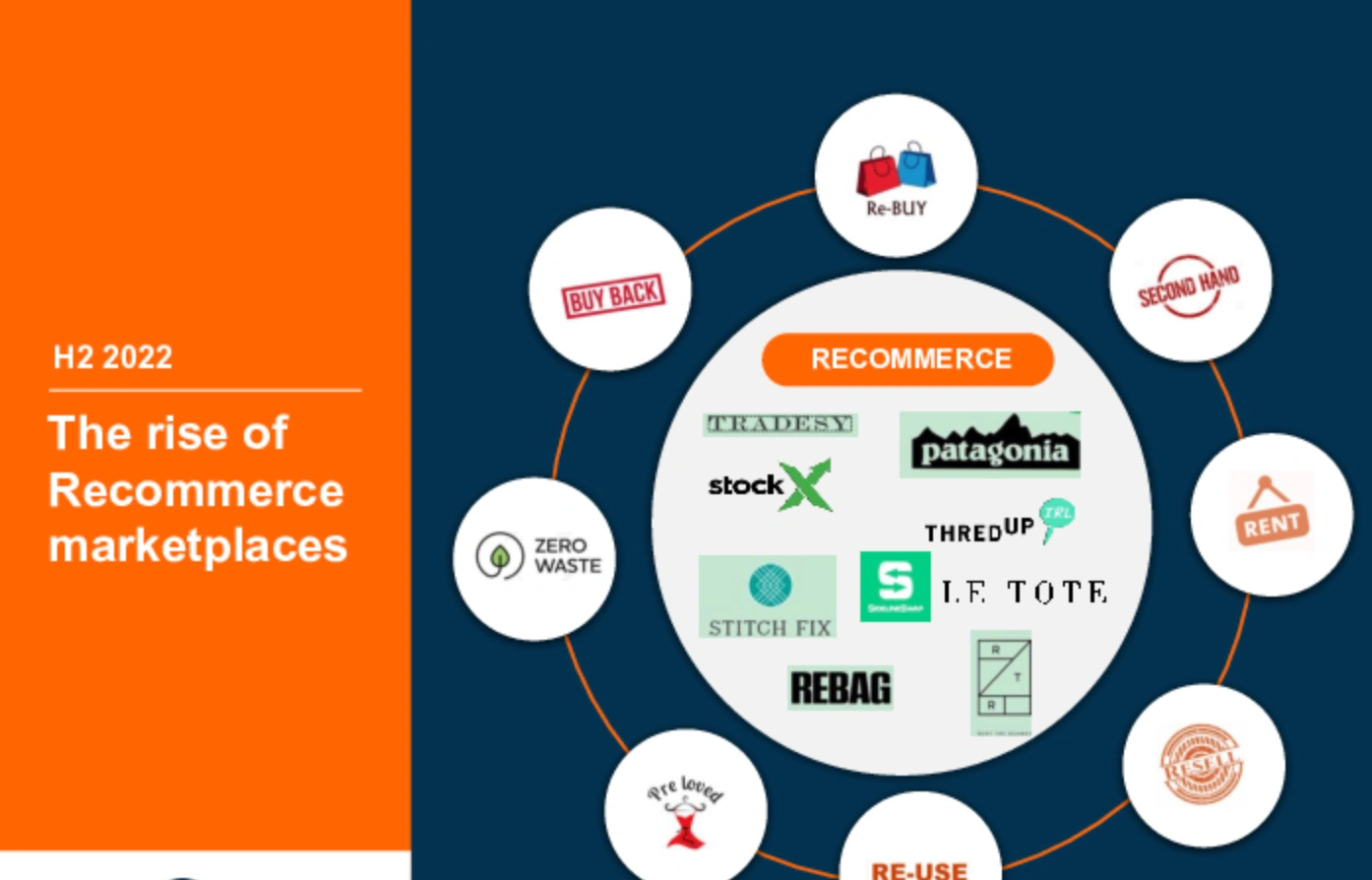
Once dismissed as a niche for bargain hunters, the recommerce industry has become a global phenomenon. Platforms like Vinted, Back Market, and ThredUp have shown that consumers love giving products a second chance. BOUDI adds another layer to that vision: turning discarded materials themselves into a new class of durable, recyclable merchandise.
The world is shifting from ownership to stewardship. In this new economy, waste is not the end of the story- it’s the beginning of a better one.
What Is Recommerce and Why Is It Booming?
Recommerce (short for reverse commerce) describes the buying, refurbishing, and reselling of used goods. It covers fashion, electronics, furniture, and even industrial materials.
Analysts estimate the global recommerce market surpassed $200 billion in 2024 and continues to grow faster than traditional retail.
The drivers:
- Environmental urgency-consumers want lower-impact options.
- Economic practicality-buyers save, sellers earn, waste decreases.
- Digital accessibility-online marketplaces connect millions instantly.
BOUDI’s work with recycled plastics aligns perfectly with this cycle. While Vinted and Back Market extend product lifespans, BOUDI extends material lifespans, ensuring that what cannot be reused directly can still be reborn as something valuable.
The Reuse Economy in Action
The reuse economy keeps resources in play longer. It relies on three pillars-collection, restoration, and redistribution—and BOUDI participates at every stage.
1. Collection
BOUDI partners with regional recyclers such as Veolia and Suez to gather post-consumer plastic waste. What others see as debris becomes the foundation for new products.
2. Restoration
In BOUDI’s workshops, plastics are sorted, cleaned, and processed into raw material flakes. These are then molded into new forms-panels, furniture, signage-ready for resale or industrial application.
3. Redistribution
Through collaborations with design studios and eco-retailers, BOUDI’s recycled materials re-enter the market as durable goods that continue to circulate.
This closed-loop model mirrors the recommerce philosophy championed by the Ellen MacArthur Foundation—an economy where nothing truly becomes waste.
How BOUDI Brings Industrial Recommerce to Life
Most recommerce platforms focus on finished goods. BOUDI applies the concept upstream—at the material level.
The company’s product families-EKOCASE, EKOPANO, and EKOMOBILIER-are crafted entirely from post-consumer plastics and designed for infinite recyclability.
Each product line represents an ecosystem:
- EKOCASE → Recycled flight cases for transport and retail displays.
- EKOPANO → Polypropylene panels used in signage and construction.
- EKOMOBILIER → Eco-furniture blending modern design with zero-waste ethics.
By embedding recommerce into production itself, BOUDI shortens the distance between waste collection and retail value. Its inclusive workforce-composed largely of employees with disabilities—transforms environmental responsibility into social empowerment.
Market Leaders and What They Teach Us
Recommerce is diverse, spanning sectors and scales:
- Vinted democratized secondhand fashion across Europe.
- Back Market normalized refurbished electronics with warranties.
- IKEA launched “Circular Hubs” for pre-owned furniture.
- Patagonia’s Worn Wear program invites customers to trade in used gear.
- Oxfam and Habitat ReStore show nonprofit recommerce can drive community impact.
BOUDI complements these examples by supplying the materials that enable durable design and repair. While others resell finished products, BOUDI feeds the ecosystem that makes resale possible.
Benefits of Recommerce for Retailers and the Planet
Recommerce delivers tangible returns:
| Benefit | Impact |
| Lower environmental footprint | Cuts CO₂ emissions and landfill waste |
| New revenue streams | Adds resale, refurbishment, and take-back income |
| Brand differentiation | Builds trust with conscious consumers |
| Circular compliance | Meets EPR and ESG sustainability targets |
For BOUDI’s clients, using recycled materials also strengthens their own sustainability narratives. Each purchase supports a measurable circular impact-tracked through life-cycle data and transparent sourcing.
Challenges on the Path to Circular Commerce
Despite rapid growth, recommerce faces hurdles:
- Quality assurance: ensuring reused products meet consumer expectations.
- Reverse logistics: managing returns and material flow efficiently.
- Consumer perception: overcoming stigma around “used” goods.
- Policy complexity: aligning with Extended Producer Responsibility laws.
BOUDI addresses these through traceability and education. Every material batch can be tracked to its origin, and clients receive documentation verifying recycled content. Through partnerships with ECOMAISON and CREALIA Occitanie, BOUDI also helps shape regional best practices for circular manufacturing.
Technology and Transparency: The Next Frontier
Digital innovation powers the next phase of recommerce.
Platforms now use AI-driven pricing, blockchain traceability, and smart sorting to scale operations. BOUDI is exploring material passports-digital IDs that record the history of each recycled product.
In collaboration with research centers like IMT Mines Alès and C2MA, BOUDI develops new ways to analyze material performance and track recycling efficiency. This data-driven transparency ensures that every sale is not just sustainable in theory-but provably circular in practice.
Recommerce as a Cultural Movement
Beyond economics, recommerce is a cultural statement: a rejection of disposability and an embrace of responsibility.
Consumers no longer define value by “newness.” They seek authenticity, longevity, and purpose—values that BOUDI embodies through its inclusive employment and ecological mission.
In workshops where plastic once destined for landfill becomes vibrant panels and furniture, employees see their craft make an immediate difference. Each transformation tells a human story of empowerment: people and materials given another chance.
Key Takeaways
- Recommerce converts used goods and materials into new market value.
- BOUDI extends the concept to industrial plastics, closing material loops.
- Partnerships with Veolia, ECOMAISON, and IMT Mines Alès ensure traceability and innovation.
- Inclusion and transparency are BOUDI’s competitive advantages.
- The recommerce revolution is not only profitable-it’s personal.
Join the circular movement with BOUDI.
Partner with us to source recycled materials or collaborate on sustainable product design.