
In the 20th century, retail was about selling more.
In the 21st, it’s about selling responsibly.
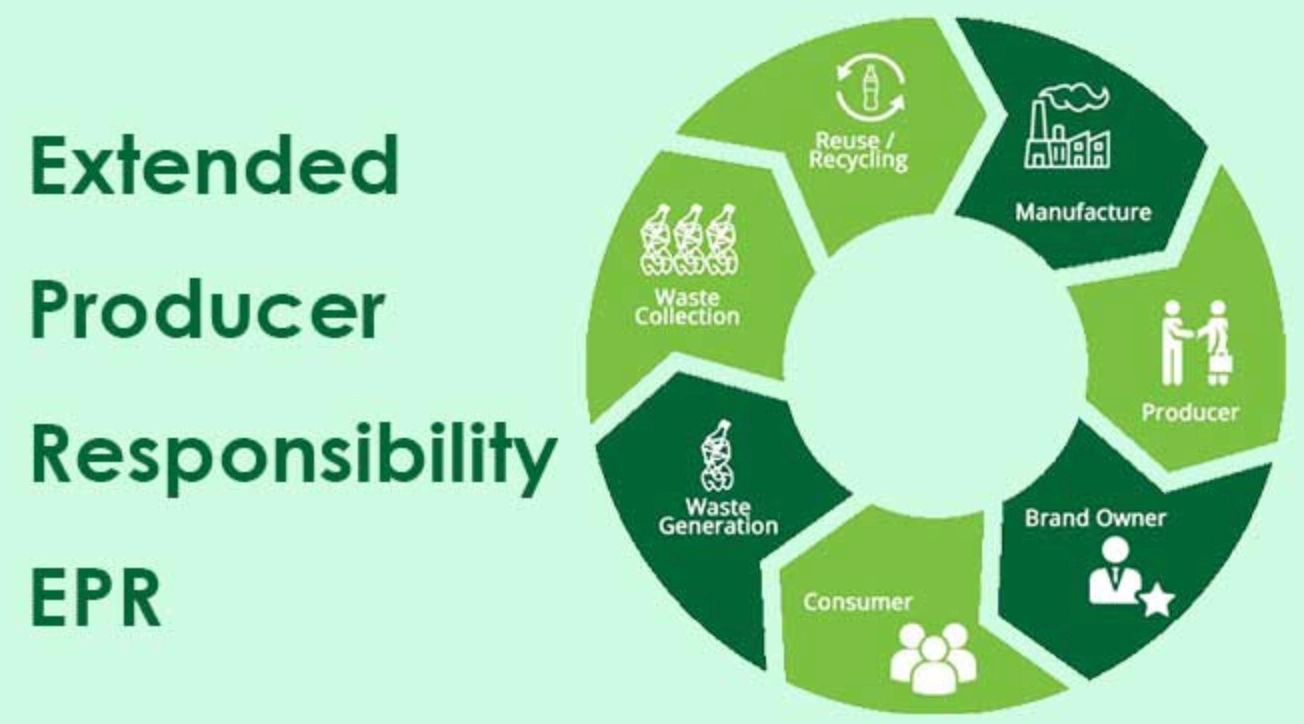
Around the world, governments are enacting Extended Producer Responsibility (EPR) laws — a policy model that holds producers accountable for the entire lifecycle of their products, from creation to end-of-life.
At BOUDI, we see EPR not as an obligation but as an opportunity: a catalyst for innovation, circular design, and transparent sustainability.
By turning waste into new materials and helping retailers trace their environmental impact, BOUDI is proving that compliance can be both ethical and profitable.
What Is Extended Producer Responsibility (EPR)
EPR is a policy approach that requires manufacturers, retailers, or importers to take financial and operational responsibility for the disposal or recycling of their products once consumers are done with them.
In short: if you make it, you’re responsible for its afterlife.
According to the Organisation for Economic Co-operation and Development (OECD), EPR is one of the most effective tools for shifting waste management costs away from taxpayers and onto the businesses that produce waste-generating goods.
Why EPR Matters in Modern Retail
The rise of EPR aligns with global sustainability goals like the EU Green Deal, UN Sustainable Development Goals (SDGs), and national zero-waste roadmaps.
For the retail sector, EPR matters because it:
- Encourages better design – companies must think about recyclability from day one.
- Reduces waste – fewer products end up in landfills or incineration.
- Promotes accountability – traceable supply chains improve brand trust.
- Drives innovation – demand for recycled materials sparks new industries.
By requiring companies to manage post-consumer materials, EPR creates a circular economy where waste becomes the starting point for the next product cycle.
Global Overview: How EPR Is Being Implemented
EPR adoption varies by region but follows the same principle everywhere: producer accountability.
Europe
The European Union leads with comprehensive directives covering packaging, electronics, batteries, and furniture.
- France’s AGEC Law (2020) expanded EPR to textiles, building materials, and toys.
- Germany’s VerpackG enforces packaging traceability and recycling quotas.
- Scandinavia uses deposit-return systems for high-efficiency recycling.
North America
- Canada has national EPR frameworks for packaging and electronics.
- California and Oregon (USA) launched packaging EPR laws in 2023–2024.
Asia
- Japan’s Home Appliance Recycling Law requires manufacturers to collect and recycle appliances.
- South Korea enforces mandatory recycling quotas with financial penalties.
These models share one goal: shifting from “end-of-pipe” waste management to design-for-reuse systems.
How BOUDI Aligns With EPR Principles
At BOUDI, EPR isn’t just a compliance checkbox – it’s embedded in our DNA.
1. Material Traceability
BOUDI uses digital tracking and documentation to record the source, type, and destination of every recycled material batch. This ensures full visibility across the product’s life cycle – vital for EPR audits.
2. Partnership With ECOMAISON
As a member of ECOMAISON, the French eco-organization managing furniture and building material waste streams, BOUDI ensures every kilo of recycled plastic contributes to France’s circular goals.
3. Localized Circular Loops
By collecting and processing waste regionally with partners like Veolia and Suez, BOUDI minimizes logistics emissions while maximizing local compliance.
4. Extended Life Products
BOUDI designs its EKOCASE, EKOPANO, and EKOMOBILIER lines for longevity and full recyclability -ensuring that every product is prepared for its next life before it even leaves the workshop.
The Benefits of EPR for Retailers
| Benefit | How It Helps Retailers |
| Cost Efficiency | Reduces waste disposal and raw-material costs |
| Brand Reputation | Builds consumer trust through visible sustainability |
| Risk Mitigation | Avoids regulatory fines and public scrutiny |
| Innovation Catalyst | Encourages eco-design and use of recycled materials |
| Competitive Advantage | Qualifies for green procurement and ESG funding |
Retailers that embrace EPR proactively — rather than reactively — gain early access to these benefits, turning sustainability into strategy.
Case Study: BOUDI’s Circular Compliance Ecosystem
BOUDI’s entire business model is a living example of EPR in action:
- Collection: Post-consumer plastics are recovered via Veolia and Suez.
- Transformation: Materials are cleaned, tested, and reprocessed at BOUDI’s workshop.
- Reintegration: The resulting eco-materials (EKOPANO, EKOCASE, EKOMOBILIER) are sold to retailers and builders.
- Traceability: Every batch is documented for EPR reporting.
This system ensures nothing is wasted, and every stakeholder—from producer to consumer—plays a part in closing the loop.
The Role of Design in Meeting EPR Goals
EPR doesn’t begin with waste—it begins with design.
Manufacturers can reduce future liabilities by designing products that are:
- Easier to disassemble,
- Made from mono-materials (single recyclable plastics),
- Built for reuse or repair.
BOUDI collaborates with designers and engineers to embed these values into product development from the start. That foresight ensures compliance while unlocking creative potential.
The Future of EPR and Circular Retail
The next evolution of EPR will merge digital transparency and material innovation:
- Material Passports will track every product’s journey through blockchain systems.
- AI-powered LCA tools will automate impact reporting.
- Cross-border EPR frameworks will harmonize compliance for global brands.
BOUDI is already preparing for this future, investing in smart traceability and expanding its European recycling partnerships. For us, EPR is not a constraint—it’s the design brief for a better world.
Key Takeaways
- EPR makes producers responsible for a product’s entire lifecycle.
- Global policies are driving retailers toward circular compliance.
- BOUDI exemplifies EPR through traceability, local recycling, and eco-design.
- Retailers can turn compliance into strategy with the right partnerships.
- The future of EPR lies in digital transparency and circular innovation.